Basic HTML Version







Kimberly A. Lumia,
President & CEO
C E O C O R N E R
Success
stories
We hope you enjoy
our summer issue of
Life & Health
. In it,
we discuss a healthy
plan for handling
menopause and share
a patient success
story from our new-
est service: Wound Care, as well as
Emergency Care. We’ve also included
articles on our Birthing Suites, Lyme
disease, and treatment for varicose
and spider veins. At Sharon Hospital,
we remain committed to enhancing
quality of care and patient safety
every day. If you have any comments
or suggestions, we’d like to hear from
you. Call
860.364.4444
or email us at
lifeandhealth@sharonhospital.com.
Kimberly A. Lumia, MSN, MBA, RN
President & CEO, Sharon Hospital
sharonhospital.com
®
Going for a bike ride? Don’t forget to wear your helmet. It just might save your life.
SUMMER 2012
C E L E B R A T I N G 1 0 2 Y E A R S O F C A R I N G F O R T H E H E A L T H O F O U R C O M M U N I T Y
S P E C I A L
BIRTHING
SUITES
SECTION
I N S I D E
THEY’RE
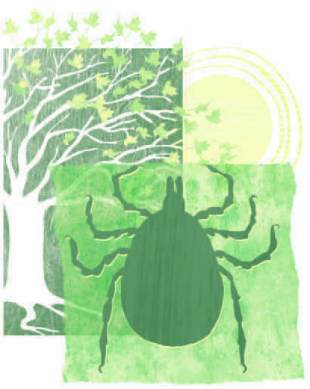
just little critters,
but ticks can cause some big health
problems—particularly those that
carry Lyme disease.
"e disease is caused by a bacte-
rium that is transmitted to humans
through tick bites, and it most o#en
occurs during the summer months,
when ticks are most active.
Because ticks are tiny, their bites
may go unnoticed. O#en the $rst
sign of a Lyme disease-related tick
encounter is a rash. It may start
as a small red spot where the bite
occurred and get bigger over time.
Eventually it can look like a bull’s-eye.
"e National Institute of Allergy
and Infectious Diseases reports
that the rash may come with fever,
headache, sti% neck, body aches and
fatigue.
Check in with a provider
Healthcare providers diagnose
Lyme disease based on a person’s
symptoms and blood tests. Once
con$rmed, the disease is treated with
antibiotics.
Of course, the best medicine of
all may be prevention. To lower your
risk of Lyme disease:
w
Avoid wooded and grassy areas.
w
When outdoors, wear long pants,
long sleeves and shoes that cover
your feet completely. Tuck shirts into
Learn about Lyme disease
pants, and fold pant legs into socks
or shoes.
w
Use tick or insect repellents con-
taining DEET or permethrin.
What to do if you get bitten
It is important to remove a tick as
soon as it is discovered. Use tweezers
to grasp the tick mouth parts as close
to the skin as possible and pull the
tick out with steady pressure. You
should then thoroughly wash the
area of the bite with soap and water
and put an antiseptic on it.
"e sooner the tick is removed,
the lower your risk of infection.
For more information about Lyme
disease and ticks, visit
ct.gov/dph
.
Tick Talk—July 28
Douglas Finch, MD, Infectious Disease,
Travel Medicine andWound Care, Chief
of Medicine, Sharon Hospital, will pres-
ent a lecture July 28, 9 to 10 a.m., in
the Four Trees Café at Sharon Hospital.
Continental breakfast will be served.