Basic HTML Version


8
q
life and health
Sight is a precious thing—and you don’t
want to lose it. So help protect your eye
health with regular eye exams.
It’s an easy step, and an important
one. Many eye problems can come on
slowly. You may not notice symptoms
at first. Regular exams help find such
problems early, often before vision is per-
manently harmed. Finding eye problems
early can also mean they are easier to
treat.
Ask your ophthalmologist how often
you should have your eyes checked.
You can take other steps to help keep
your eyes healthy too:
ww
Don’t smoke.
ww
Eat a healthy diet.
ww
Be active.
ww
Keep blood pressure under control.
ww
Protect your eyes from the sun with
sunglasses and a brimmed hat.
ww
Use protective eyewear when playing
sports.
Source: Prevent Blindness America
Eye exams: Here’s looking at you
THINK
of your most precious
possessions. Is your eyesight one of
them?
Your vision is nothing to take for
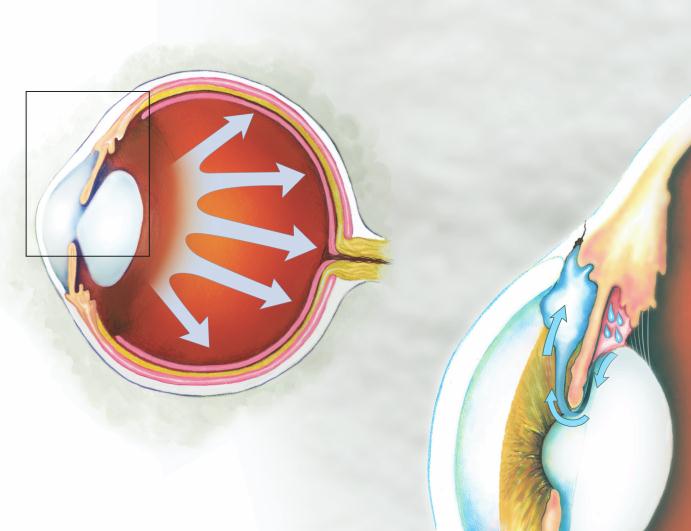
granted. Here’s why: An eye disease
called glaucoma could slowly be
robbing you of your sight.
The most common form of
glaucoma, open-angle glaucoma,
happens when
the fluid
inside the eye
cannot drain
properly. As
the fluid builds
up, it can
cause increased pressure that may
gradually damage the nerve that
helps you see, leading to partial
vision loss or even blindness.
What are the symptoms?
Open-angle glaucoma causes no
symptoms at first. Vision loss
happens so slowly that you might
not notice it right away. But the
loss of vision caused by glaucoma is
permanent.
According to the National Eye
Institute (NEI), anyone can develop
open-angle glaucoma, but those at
higher risk include:
w
w
People older than 60, especially
Mexican Americans.
w
w
African Americans older than 40.
w
w
People with a family history of
glaucoma.
Keeping
an eye on
glaucoma
What’s the best way to protect
your eyes?
Have your eyes checked
by an ophthalmologist. A test
can measure
pressure inside
the eye.
Your
healthcare
provider may
also want to
dilate your eyes using special drops
to enlarge the pupils. This allows the
provider to see more of the inside of
the eye to check for signs of glaucoma.
While there is no cure for
open-angle glaucoma, early detection
and treatment can help control the
disease and prevent major vision loss.
Treatment may involve:
w
w
Medication to reduce eye
pressure. The medication works by
either decreasing the production of
fluid in the eye or improving fluid
drainage.
w
w
Laser surgery or traditional
surgery to help fluid drain out of the
eye and reduce eye pressure.
To learn more about open-
angle glaucoma, visit the NEI
website at
www.nei.nih.gov
.
For more information about the
ophthalmology team at Sharon
Hospital or to schedule a screening,
please call
877.364.4202
.
pressure
lens
cornea
iris
trabecular
meshwork
fluid
buildup
ciliary
body
optic nerve
detail shown
at right
pupil
Normally, a clear fluid produced
in the ciliary body within the eye
is allowed to drain through the
trabecular meshwork.
How glaucoma develops
VISION
Coffey infographic with information from the National Eye Institute
When fluid is unable to drain properly, it can cause
increased pressure in the eye. This pressure may rise
to a level that damages the optic nerve. Open-angle
glaucoma—and vision loss—may result.