Basic HTML Version




Magnetic resonance imaging (MRI)
clarity and reveal more details of the
body than a regular x-ray exam.
What it’s used for:
CT can be
used to diagnose different types of
cancers, cardiovascular diseases,
infectious disease, muscle and bone
disorders, blood vessel diseases and
internal organ trauma.
X-rays and CT scans both ex-
pose you to small doses of radia-
tion, however the risk of developing
cancer from x-ray exposure is small,
according to the U.S. Food and Drug
Administration (FDA).
To help reduce your risk of radia-
tion exposure:
w
w
Keep a record of when you have
been x-rayed, and share that history
with your provider.
w
w
Ask whether an alternative to an
x-ray is available.
w
w
Tell your provider if you are preg-
nant or think you might be pregnant.
Overall, the benefits of medical
x-rays far outweigh the risks, accord-
ing to the FDA. These diagnostic
tests can help improve your health
and even save your life.
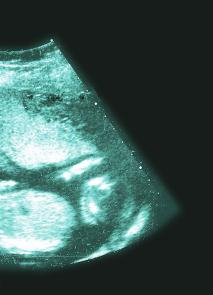
Ultrasound
What it is:
Ultrasound uses
high-frequency sound waves to ob-
tain images of the inside of the body.
During the procedure, sound waves
are aimed into the body, and the
waves bounce off of internal organs,
fluids and structures. These waves
are then measured by the ultrasound
machine and transformed into an
image of a particular body area.
What it’s used for:
One of the
most common uses of ultrasound
is to evaluate the progress of a fetus
during pregnancy. Ultrasound can
also show movement of internal
tissues and organs, as well as blood
flow and heart valve functions. This
can help to diagnose a variety of
heart conditions or to assess dam-
age following a heart attack or other
illness. In addition, ultrasound can
help determine the source of pain,
swelling or infection in many parts of
the body, and it can be used to guide
procedures such as needle biopsies.
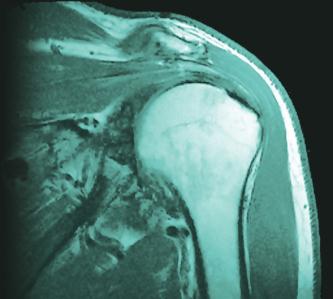
Magnetic resonance
imaging (MRI)
What it is:
MRI uses a strong
magnetic field and radio waves to
produce clear and detailed computer
images of internal organs and tissues.
What it’s used for:
MRI can help
diagnose sports-related injuries,
especially those affecting the knee,
shoulder or hip. MRI scans are also
used to diagnose heart disease and
other heart problems, as well as
tumors or disease in other organs.
Additional source: Radiological Society of North America
Call Imaging at
Sharon Hospital at
860.364.4468 for
more information or to
make an appointment.
lifeand health
w
5
Sharon Hospital promotes
firefighter safety
At Sharon Hospital, we
know the importance of
educating our local fire-
fighters on the safety risks
of magnetic resonance
imaging (MRI).
MRI scanners use a
magnetic field and radio
waves to produce images
of anatomical structures. Applying strong
magnetic forces to the body alters the nor-
mal orientation of hydrogen atoms present
in all organic tissue. This shifting of atomic
orientation is scanned by radio waves and
translated into a visual image. Though MRI
units are safe in the medical environment,
they present a particular challenge to
emergency responders due to the mag-
netic properties of the MRI scanner.
This past year, Lead Technologist Pam
Downs provided training to local firefight-
ers who may report to Sharon Hospital in
the event of an emergency.
In addition to a presentation on
MRI safety, a tour of the MRI suite was
conducted, illustrating the potential for
injury to firefighters and the need for
emergency responders to be aware of the
invisible forces that can affect their safety.
Firefighters were surprised to learn that
the magnet force is always present, even
when the imaging suite is closed.
Firefighters responding to an emergency
may be carrying air cylinders, axes, pike
poles and other steel, iron or ferrous metal
objects and could be seriously injured when
these objects become deadly projectiles
as they are attracted to the magnetic
force.
The presentation was well received
and has since been requested by firefight-
ers in other towns.
On a daily basis, our firefighters go
above and beyond the call of duty when
responding to emergencies. By educating
them about the importance of MRI safety,
we have the opportunity to keep them,
our staff and patients safe.
PamDowns,
MRI Lead
Technologist